

Unveiling Maslow's Pyramid: A Journey Through the Landscape of Human Motivation

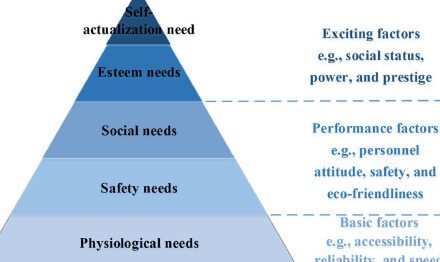
Unveiling Maslow's Hierarchy: A Historical Exploration of Human Motivation
The historical exploration of human motivation is deeply rooted in the groundbreaking work of psychologist Abraham Maslow, who introduced the world to his now-famous concept of a hierarchy of needs in a paper titled "A Theory of Human Motivation" in 1943. This hierarchy, often depicted as a pyramid, posits that humans are motivated by a series of progressively higher needs, starting with the most basic physiological requirements and moving up towards the pinnacle of self-actualization.
At the base of Maslow's pyramid, we find the fundamental needs for survival: food, water, warmth, and rest. These are the prerequisites for sustaining life, and until they are met, Maslow believed that all other motivations would remain secondary. The next level addresses our need for safety and security, encompassing personal and financial security, health, and well-being.
As we ascend the pyramid, we encounter the social layer, which speaks to our intrinsic need for belongingness and love. This includes friendships, relationships, and family bonds. Above this is the esteem level, where the focus shifts to the need for respect, recognition, and self-esteem. It is at this stage that individuals seek achievement, status, and responsibility.
The apex of the pyramid is self-actualization, a state in which people are motivated to realize their full potential and pursue personal growth, creativity, and peak experiences. Maslow later expanded his theory to include cognitive, aesthetic, and transcendence needs, further enriching the understanding of human motivation.
In the context of technology, Maslow's Hierarchy has been applied to various aspects such as user experience (UX) design, workplace motivation, and even artificial intelligence. For instance, technology products are often designed with the hierarchy in mind, ensuring that they first address users' basic functional needs before offering features that foster community or enable personal achievements.
Moreover, in the modern workplace, technology plays a pivotal role in fulfilling employees' needs across Maslow's spectrum. From providing tools that ensure safety and security in remote work environments to platforms that facilitate social connections and recognition amongst peers, technology intersects with each level of human motivation.
Finally, as artificial intelligence continues to evolve, there is a growing discussion around whether AI systems could be designed to understand and cater to human needs following Maslow's framework, potentially leading to more empathetic and human-centric AI.
Maslow's Hierarchy remains a vital tool for understanding human motivation, and its principles continue to influence technological advancements, shaping how products are developed and how they interact with the very fabric of human desires and aspirations.
How has the concept of Maslow's Hierarchy of Needs influenced the design and development of user-centric technologies?
The concept of Maslow's Hierarchy of Needs has significantly influenced the design and development of user-centric technologies by emphasizing the importance of understanding and addressing user motivations and needs. Designers and developers often use this framework to create technology that meets basic functional requirements (akin to physiological and safety needs) before addressing higher-level aspirations such as social connectivity, esteem, and self-actualization. This approach ensures that technologies not only serve practical purposes but also enhance users' lives on a more personal and emotional level, leading to better user engagement and satisfaction.
In what ways have technological advancements reshaped our understanding of Maslow's Pyramid in the context of modern human motivation?
Technological advancements have expanded access to basic needs such as food and shelter through innovations like smart agriculture and energy-efficient housing, potentially making the lower levels of Maslow's Pyramid more attainable. Additionally, technology has transformed social connectivity, reshaping our understanding of belongingness with the rise of social media and virtual communities. It also offers new avenues for self-actualization through online education and personal growth platforms, suggesting that technology can facilitate faster progression up the pyramid. However, it also introduces new challenges and dependencies that may complicate the hierarchy of needs.
Can the principles of Maslow's Hierarchy be applied to AI and machine learning to create more adaptive and responsive technologies?
Yes, the principles of Maslow's Hierarchy can be conceptually applied to AI and machine learning to create technologies that are more adaptive and responsive. By structuring AI development with a hierarchy of needs—starting from basic functionality to more complex tasks like self-improvement—systems can be designed to progressively unlock higher capabilities as they become more proficient, much like how humans grow and develop. This approach could lead to AI that is better at self-regulation and autonomous decision-making.

Unlocking Entertainment: Exploring Free IPTV Options for Netflix Spain

Streamlining Your Tunes: How to Pay for Spotify with Nequi

Unlocking the Full Potential of Streaming: A Deep Dive into IPTV Extreme

Unlocking Entertainment: The Rise of IPTV Services in Spain

Exploring NewPlay IPTV: The Next Generation of Streaming Services

Experience Seamless Streaming: How Joyful IPTV is Revolutionizing Home Entertainment
Go up
Deja una respuesta