

Artificial Intelligence in Accounting: Shaping the Financial Future

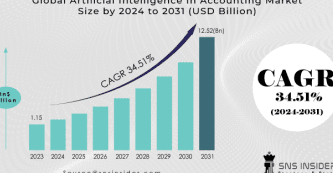
Revolutionizing Financial Management with AI in Accounting
The integration of Artificial Intelligence (AI) in the field of accounting is transforming the landscape of financial management. AI technologies are enabling accountants to automate routine tasks, reduce errors, and provide more insightful analysis. This shift not only enhances efficiency but also allows financial professionals to focus on more strategic activities.
One of the most significant impacts of AI in accounting is on data processing. AI systems can process vast amounts of data at speeds unattainable by humans. This capability means that financial reports, which once took weeks to compile, can now be generated in a fraction of the time. Moreover, AI algorithms are adept at identifying patterns and anomalies in data, leading to more accurate and fraud detection.
Another area where AI is making a mark is in predictive analytics. By leveraging historical data, AI can help forecast future financial trends, enabling businesses to make proactive decisions. This predictive power is particularly useful for budgeting and financial planning, as it provides a more data-driven approach to managing a company's finances.
AI is also revolutionizing customer service within the accounting sector. Chatbots and virtual assistants, powered by AI, can handle inquiries and provide clients with instant access to their financial information. This technology improves client engagement and satisfaction while freeing up human accountants to tackle more complex issues.
Furthermore, AI-driven compliance tools are ensuring that businesses stay on the right side of ever-changing financial regulations. These tools can automatically update systems in response to new laws and audit financial records to ensure compliance, significantly reducing the risk of costly legal penalties.
In conclusion, the advent of AI in accounting is a game-changer for financial management. It offers unprecedented levels of efficiency, accuracy, and insight, which are essential for businesses looking to thrive in today's competitive environment. As AI technology continues to evolve, its role in accounting will undoubtedly expand, further transforming the future of finance.
How is Artificial Intelligence transforming accounting practices and financial management?
Artificial Intelligence (AI) is significantly transforming accounting practices and financial management by automating routine tasks, such as data entry and reconciliation, which increases efficiency and reduces human error. AI algorithms can analyze large volumes of financial data to provide insights and forecasts, enhancing decision-making. Additionally, AI contributes to fraud detection by identifying unusual patterns that may indicate fraudulent activity. As AI continues to evolve, it is expected to further revolutionize strategic financial planning and compliance management within the industry.
What are the key AI technologies being integrated into accounting software to improve accuracy and efficiency?
Key AI technologies integrated into accounting software include machine learning for pattern recognition and anomaly detection, natural language processing (NLP) for interpreting and categorizing textual data, predictive analytics for forecasting financial trends, and robotic process automation (RPA) for automating repetitive tasks, thereby improving accuracy and efficiency in financial operations.
How can businesses prepare their accounting teams for the integration of AI and what skills will be most valuable in this new landscape?
Businesses can prepare their accounting teams for AI integration by investing in upskilling and reskilling initiatives. Teams should focus on developing data analytics skills, understanding AI and machine learning concepts, and becoming proficient in the use of AI-powered accounting tools. Emphasizing strategic thinking and decision-making abilities will also be crucial, as AI will handle routine tasks, allowing accountants to focus on more complex and strategic financial decisions. Additionally, fostering a culture of continuous learning and adaptability is key to staying relevant in the evolving technological landscape.

Troubleshooting Guide: How to Resolve the 'Klarna Not Letting Me Pay' Issue at Online Stores

Scan and Pay: A Step-by-Step Guide to Using Barcode Payments at Checkout

Seamless Shopping: How to Use Klarna for Payment on Zalando

Mastering QR Code Payments: A Step-by-Step Guide to Using Mercado Pago

Scan to Pay: The Ultimate Guide to Making Payments with Barcode Technology

Seamless Transactions: How to Effortlessly Pay with Crypto.com
Go up
Deja una respuesta